
Sunday, December 18, 2016
They Didn't Live Happily Ever After
In every story I have read as a child, whether it was a fairytale or piece of realistic fiction, the characters always ended up accomplishing their dreams or living happily ever after. While these beautiful endings may be satisfying to the readers, they ignore the harsh realities behind the sugarcoated facade. In the end, achieving an item or a material or even a person does not guarantee happiness no matter how much you idolize it or strive for it.
Such is true in the case of the Youngers. All of them have their own individual dreams. Walter wishes to to be successful and rich and respected by the people around him. Ruth just wants to have a stable family with a good loving environment. Mama's dream is to live in a nice house and neighborhood. Beneatha wants to make an impact in the world by becoming a female doctor and accepting her culture. In the end, all of them achieve some semblance of their dreams: Ruth and Mama both end up living in a nice house with a good environment and Walter ends up making his investment while Beneatha learns to love her African roots. However their dreams are shattered and they are brought back to reality when Walter is scammed and his money is stolen. Additionally the threat of the so called welcoming committee and how "[people's hearts] just can't be [changed]" along with the never-ending racism and segregation. Although everyone strives toward their dream, the final result is total a nightmare. They lose the insurance money and along with it the hard work and life of Walter Sr. They receive the house but also take in the racism and terror that the white community may hurt them.

Sunday, December 11, 2016
Materialism in the Flapper Era
In the Great Gatsby and The Diamond as Big as the Ritz, the depiction of women as objects is reflective of the viewpoints of the 1920s and the flapper era. The flapper era marked a time period in which women were viewed as sexual objects and a wave of demand for women's rights resulted.
In both of Fitzgerald's pieces through the depiction of its female characters, the image of a woman in the flapper era is illustrated as one of selfishness and greed; the women are viewed like porcelain dolls in display cases: they are to be admired and confined into their display cases. In The Diamond as Big as the Ritz, Kisamine is shown to have fallen in love with John even though she knows that he is going “to be put away” in the end. She is then described as selfish when it is discovered that “[she’d] rather [have him] be put away than ever kiss another girl.” In addition, Kisamine is illustrated as “the most beautiful person he had ever seen… and the incarnation of physical perfection.” John is attracted and mesmerized by her physical beauty and her appearance, and his attraction to her appearance further demonstrates his view of her as a desired sexual object. He views her as an object to be admired or to be fought for, but not as an equal partner.
This is shown in The Great Gatsby also. Daisy is described as "the king's daughter [who lives] high in a white palace" and as a "golden girl". Daisy is described as an object that is locked away with no power of her own. Also, the manipulative nature of Daisy is frequently revealed through her obsession with monetary value. She had never inquired about Jay Gatsby or James Gatz until she found out about Gatsby’s wealth and reputation.
This is evident when Gatsby claims that "'her voice is full of money"'. Daisy herself is connected with money and wealth, which allows the reader to see Gatsby’s desire for her as his desire for wealth, money, and status. While Daisy is materialistic and is drawn to Gatsby due to his wealth and high status in society, it is shown that Gatsby also is drawn to Daisy physically as well as to the monetary value that she represents.

Sunday, December 4, 2016
The Suffocating Valley of Ashes
While reading The Great Gatsby, one passage really stood out to me. It was the description of the so called Valley of Ashes and its inhabitants. Nick's viewpoint and vivid description stuck in my mind. The passage begins on page 23, the opening page and note of 2.
"About half way between West Egg and New York the motor road hastily joins the railroad and runs beside it for quarter of a mile, so as to shrink away from a certain desolate area of land. This is a valley of ashes-a fantastic farm where ashes grow like wheat into ridges and hills and grotesque gardens; where ashes take the forms of houses and chimneys and rising smoke and, finally, with a transcendent effort, of men who move dimly and already crumbling through the powdery air. Occasionally a line of gray cars crawls along an invisible track, gives out a ghastly creak, and comes to rest, and immediately the ash-gray men swarm up with leaden spades and stir up an impenetrable cloud, which screens their obscure operations from your sight.
But above the gray land and spasms of bleak dust which drift endlessly over it, you perceive, after a moment, the eyes of Doctor T. J. Eckleberg."
This passage gives a grave description of the Valley of Ashes, a place inhabited by the poor who are described as ashes. The valley of ashes is a filthy, polluted, and tarnished home that will never seem clean and alive; it is a toxic environment and it chokes its inhabitants. The people are described as "dim" and "crumbling". Even the cars are described as "crawling" and "ghastly", depicting the enormous effect of the suffocating cloud of ashes. Everyone and everything are clearly broken beyond repair and are getting eaten alive by the ashes, the effect of commercialism.
But the eyes of Doctor T.J. Eckleberg rise above everything else, acting as a beacon of hope and a goal to strive for, surviving above all the people and the ashes. These eyes symbolize the fruitless efforts of the people to achieve a goal that will never come true.

"About half way between West Egg and New York the motor road hastily joins the railroad and runs beside it for quarter of a mile, so as to shrink away from a certain desolate area of land. This is a valley of ashes-a fantastic farm where ashes grow like wheat into ridges and hills and grotesque gardens; where ashes take the forms of houses and chimneys and rising smoke and, finally, with a transcendent effort, of men who move dimly and already crumbling through the powdery air. Occasionally a line of gray cars crawls along an invisible track, gives out a ghastly creak, and comes to rest, and immediately the ash-gray men swarm up with leaden spades and stir up an impenetrable cloud, which screens their obscure operations from your sight.
But above the gray land and spasms of bleak dust which drift endlessly over it, you perceive, after a moment, the eyes of Doctor T. J. Eckleberg."
This passage gives a grave description of the Valley of Ashes, a place inhabited by the poor who are described as ashes. The valley of ashes is a filthy, polluted, and tarnished home that will never seem clean and alive; it is a toxic environment and it chokes its inhabitants. The people are described as "dim" and "crumbling". Even the cars are described as "crawling" and "ghastly", depicting the enormous effect of the suffocating cloud of ashes. Everyone and everything are clearly broken beyond repair and are getting eaten alive by the ashes, the effect of commercialism.
But the eyes of Doctor T.J. Eckleberg rise above everything else, acting as a beacon of hope and a goal to strive for, surviving above all the people and the ashes. These eyes symbolize the fruitless efforts of the people to achieve a goal that will never come true.
Sunday, November 27, 2016
The American Nightmare
In Chapter Two of the Great Gatsby, Nate sees for the first time, the eyes of Doctor T.J. Eckleberg. The eyes are described as "blue and gigantic" and they peer through "a pair of enormous yellow spectacles which pass over a non-existent nose." The billboard looks over the entire Valley of the Ashes, the blue eyes silently watching the desolate wasteland grow with the rise of consumerism.
These condemning eyes are framed by gold spectacles, symbolizing the eyes of the wealthy and rich judging the efforts and lives of the poor. More than that however, the harsh, judging eyes symbolize the impossibility of the "American Dream". The eyes of the rich and those who have set the standard for the so called "American Dream" silently condemn and mock the efforts of the poor. The very much desired "American Dream" consists of the idea that anyone can be rich and successful as long as they work hard. The disdainful gaze of the eyes behind the golden spectacles seem to claim that the "American Dream" is just what it is called: a dream that will never become reality no matter how many times you wish for it. The efforts of those who wish for money and gold turn to ashes and the valley is filled with the razed wishes of the people who once dreamed.
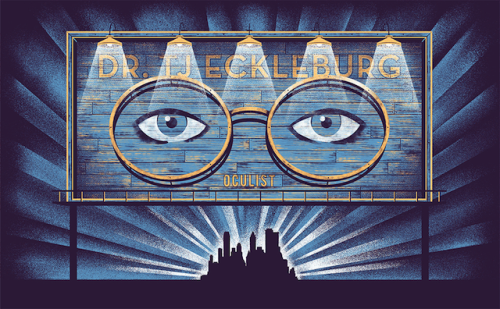
The eyes also represent the desired ideal for society. The ideal is exalted highly upon a billboard away from the dirty and filthy ashes, rising above all the working class. Society's ideal is that of wealth and flamboyance. People who do not meet that standard are viewed as inferior and harshly judged by society. Just like Pecola was put under the scrutiny of society and her neighbors, the harsh blue eyes condemn the working class for being unable to achieve the "American Dream" and society's ideal.

These condemning eyes are framed by gold spectacles, symbolizing the eyes of the wealthy and rich judging the efforts and lives of the poor. More than that however, the harsh, judging eyes symbolize the impossibility of the "American Dream". The eyes of the rich and those who have set the standard for the so called "American Dream" silently condemn and mock the efforts of the poor. The very much desired "American Dream" consists of the idea that anyone can be rich and successful as long as they work hard. The disdainful gaze of the eyes behind the golden spectacles seem to claim that the "American Dream" is just what it is called: a dream that will never become reality no matter how many times you wish for it. The efforts of those who wish for money and gold turn to ashes and the valley is filled with the razed wishes of the people who once dreamed.
The eyes also represent the desired ideal for society. The ideal is exalted highly upon a billboard away from the dirty and filthy ashes, rising above all the working class. Society's ideal is that of wealth and flamboyance. People who do not meet that standard are viewed as inferior and harshly judged by society. Just like Pecola was put under the scrutiny of society and her neighbors, the harsh blue eyes condemn the working class for being unable to achieve the "American Dream" and society's ideal.
Much like how Americans strove to be rich and fancy and how Pecola strives to gain the blue eyes that society determines to be beautiful, The Wizard of Oz is represents the search for the ideal and desired traits. Each member of the party strives to gain something that is unnatural for them: for the scarecrow it is a brain, for the tinman it is a heart. They are criticized for not having a brain or not having a heart and are determined to achieve what society deems they should have. By traveling on the yellow brick road, a road seemingly made of gold like the golden spectacles and leading to success and happiness, they strive to accomplish their wishes. When they reach the Emerald City of Oz however, they learn that the wizard and their vision of greatness is all a deception. Like Pecola's blue eyes and the Emerald City, the idea of the "American Dream" is all an illusion: it's an near impossible ideal that transforms what once were innocent dreams into traumatic nightmares.
Sunday, November 20, 2016
Past What Your Eyes Can See
In a world where we judge people based on their appearances, any type of equality has been destroyed and thrown away. Whether we realize it or not, the moment we lay eyes on a person, we are automatically evaluating their size, appearance, height, or weight. Such is the case for Pecola, when people instinctively deem her ugly or ignore her based off her appearance and her race. Before her baby is ever seen or born, people call it "the ugliest thing walking" solely based off the fact that Pecola is black and her appearance is as a result,"ugly".

While you may deny judging people based upon appearances, it happens unconsciously for everyone. This is how stereotypes exist. By categorizing a person based on appearance or in this case race, we make generalizations or assumptions that society assume to be true.
Think about it. If exactly two people acted the same exact way, spoke the same words, we would still have different opinions about them based on how they are dressed or what they look like.
I remember reading about a survey not too long ago. The survey showed two different faces and asked people which person they were more likely to trust based on their faces. People overwhelming deemed one face more trustworthy because it had less imposing eyebrows or bigger eyes. When such trivial matters factor into determining a person's character traits, maybe we should question what we see.
And maybe we should start seeing with our hearts, instead of our eyes.
While you may deny judging people based upon appearances, it happens unconsciously for everyone. This is how stereotypes exist. By categorizing a person based on appearance or in this case race, we make generalizations or assumptions that society assume to be true.
Think about it. If exactly two people acted the same exact way, spoke the same words, we would still have different opinions about them based on how they are dressed or what they look like.
I remember reading about a survey not too long ago. The survey showed two different faces and asked people which person they were more likely to trust based on their faces. People overwhelming deemed one face more trustworthy because it had less imposing eyebrows or bigger eyes. When such trivial matters factor into determining a person's character traits, maybe we should question what we see.
And maybe we should start seeing with our hearts, instead of our eyes.
Sunday, November 13, 2016
Going in Circles
In the Bluest Eye, the cycle of abuse and emotional trauma is evident through Pecola's family. Cholly Breedlove was traumatized from white men experiencing his first sexual encounter and his being "rejected... by his father"(Morrison 160). At first he blames Darlene, the person who experienced his failure and the person he "had not been able to protect, or spare". Then after he marries Pauline, he proceeds to blame her and relieve stress through domestic abuse.

Through all of this, a circle is formed: one of pain and suffering. Through Cholly and Pauline's painful marriage and pasts, Sammy and Pecola are unable to escape the circle that they are trapped in. The cycle continues as Cholly rapes Pecola and Sammy proceeds to run away from home consistently. Perhaps it is Cholly's abandonment as a baby in a junkyard, or his humiliation by the white men, either way he has been broken again and again by his past and by society's unrelenting grip. As for Pauline, her own belief in her ugliness due to her lame foot and her missing tooth make her a lonely and pitiful character and thus a victim of society. These victims continue the cycle of abuse and pain onto their children, breaking Pecola especially beyond repair.
In the same way that Pecola is affected, the cycle is evident in Maus also. Vladek often cycles figuratively and literally into the past as his trauma is never ending and ongoing like a circle. His past memories consequently affect Art, who feels oppressed by his father's thriftiness and firm adherence to his past practices. As a result, Art becomes more accusatory and harsh towards his father and the memories of his late mother.
The key point of a circle is that it is never-ending. It continues on even after the causes of pain are gone and it carries on through generations. It is unescapable and solid as its victims are trapped inside and unable to escape.
Through all of this, a circle is formed: one of pain and suffering. Through Cholly and Pauline's painful marriage and pasts, Sammy and Pecola are unable to escape the circle that they are trapped in. The cycle continues as Cholly rapes Pecola and Sammy proceeds to run away from home consistently. Perhaps it is Cholly's abandonment as a baby in a junkyard, or his humiliation by the white men, either way he has been broken again and again by his past and by society's unrelenting grip. As for Pauline, her own belief in her ugliness due to her lame foot and her missing tooth make her a lonely and pitiful character and thus a victim of society. These victims continue the cycle of abuse and pain onto their children, breaking Pecola especially beyond repair.
In the same way that Pecola is affected, the cycle is evident in Maus also. Vladek often cycles figuratively and literally into the past as his trauma is never ending and ongoing like a circle. His past memories consequently affect Art, who feels oppressed by his father's thriftiness and firm adherence to his past practices. As a result, Art becomes more accusatory and harsh towards his father and the memories of his late mother.
The key point of a circle is that it is never-ending. It continues on even after the causes of pain are gone and it carries on through generations. It is unescapable and solid as its victims are trapped inside and unable to escape.
Sunday, November 6, 2016
Be You(tiful)
In the Bluest Eye, Pecola Breedlove despises her own eyes; she instead wishes for a "smiling white face" and blue eyes" (pg 50). To her, all she can be is ugly and despicable. For Pecola, she outlines having blue eyes as the only way she will be accepted and be able to change her lifestyle. The white, blond-haired, and blue eyed ideal for Pecola is Mary Jane. To girls like Pecola from that time period, Mary Jane was like the Barbie for young women; she represented the perfect girl with the perfect looks and an easy, comfortable life.
When I was younger, I once read a story about a girl who wanted blue eyes. She was a white and a brunette but she longed for the brilliant blue eyes that she thought were so pretty. She was Irish, and the Irish standard of beauty at that moment was white skin and blue eyes.
So she prayed every day, longing for the blue eyes that she didn't have. She begged for her brown eyes to turn blue. Alas, after fervent praying, her eyes were still brown. She did not lose faith however, and believed that there must be a reason that her eyes were still brown. Later in life, she realized why eyes were brown. Over the years, she had decided be become a missionary, and worked in India often with young children. She realized that her brown eyes had allowed her to become close and precious to the children she worked with. Having blue eyes would make her seem foreign and she would never had been accepted or fit in with the community in India. Ultimately, her brown eyes proved to be empowering than if she had blue eyes.
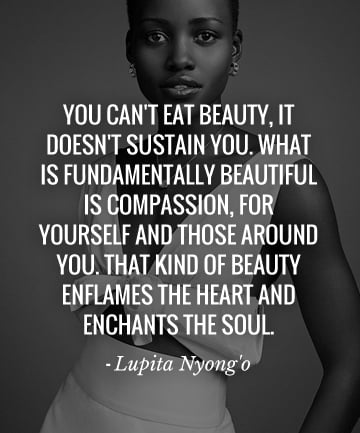
In the end, we should just be happy with what we have even if it doesn't fit society's standards of beauty, because "nothing makes a woman more beautiful that the belief that she is beautiful" (Sophia Loren).
 |
| Mary Jane Candy |
So she prayed every day, longing for the blue eyes that she didn't have. She begged for her brown eyes to turn blue. Alas, after fervent praying, her eyes were still brown. She did not lose faith however, and believed that there must be a reason that her eyes were still brown. Later in life, she realized why eyes were brown. Over the years, she had decided be become a missionary, and worked in India often with young children. She realized that her brown eyes had allowed her to become close and precious to the children she worked with. Having blue eyes would make her seem foreign and she would never had been accepted or fit in with the community in India. Ultimately, her brown eyes proved to be empowering than if she had blue eyes.
In the end, we should just be happy with what we have even if it doesn't fit society's standards of beauty, because "nothing makes a woman more beautiful that the belief that she is beautiful" (Sophia Loren).
Sunday, October 30, 2016
Barbie: An Unachievable Fairytale
Since I was a child, I loved playing with Barbies; there was just something about her that had me convinced that she was perfect. With such a doll, I could create an ideal world and society that was perfect to me. Barbie deserved her own "Once Upon a Time" story. Everyone loved Barbie; she had it all: a boyfriend, an elite circle of friends, and her own dream house.
However, there's been a recent debate about the unrealistic body expectations and standards set by the Barbie doll. In fact, Barbie is so unrealistic that if she were a human women "her breasts [would be] so out of proportion to the rest of her body that... she'd fall flat on her face" (Prager 353). Additional research has shown that if Barbie was an actual woman, she'd be unable to walk without being on all fours and would only have half a liver and a couple inches of intestine. Barbie can be compared to pink elephants: she just isn't natural in any way. For young girls growing up, the idea of Barbie may seem like an ideal that needs to be achieved. The doll creates unrealistic expectations that girls are exposed to at a young age.
Furthermore, Prager acknowledges the sexualization of women is ongoing by claiming that "twenty-five years later, movies and videos are still filled with topless women and covered men" (Prager 355). The sexualization of women is evident today everywhere. With magazine covers or posters that would scandalize Jesus himself, the female body is seen as a desirable object. For example, the annual Victoria's Secret Fashion Show which showcases the bodies of countless women (of course all of them near naked) is a fun flaunting of the female body that 99% of the female population cannot even dream about. The average American women wears a size 12, yet the average model wears a size 6 or less. With such blatant sexualization of the ideal female body, is it not evident why an unrealistic standard would be set for women?
These ridiculous standard may have a more severe effect on women, but it is not to be said that there is no pressure on males. With all the focus on the scandalous Barbie, the boys' side of the story is concealed. Though women are compelled by the pressure to have the perfect, boys are also pressured with unrealistic expectations. The sexualization of women and their unrealistic ideals may be more severe than those pushed onto men, but the ideal image of a man also exists within children's toys. The sexualization of children's toys although more evident in female characters, also exists with toys designed for boys.
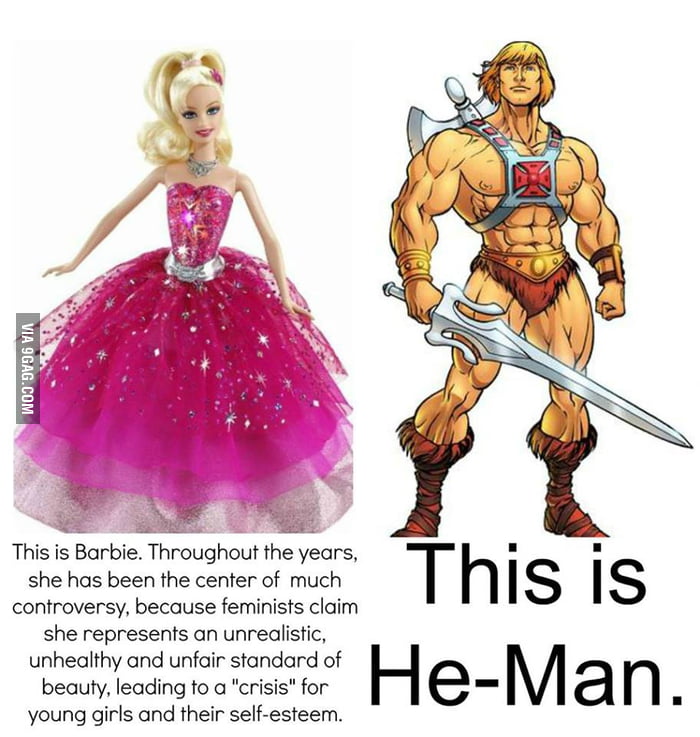
Although Barbie is taking a hard hit with the rise of feminism and society's rhetoric, she still holds a special meaning to me. Growing up, my favorite Barbie was not the prettiest or the fanciest Barbie: it was the Barbie that set a path for herself. This Barbie was equipped with bendable elbows, deviating from the stiffness that Barbies usually had and she became all the more alive to me. She also was a mother; as she came with a little baby figurine. Being a single mother with no Ken doll in sight, she represented female empowerment and the fact that happily ever after didn't require a man.
As a child, I never really paid attention to the fact that Barbie was tall and skinny, or that she was blond with blue eyes. She was just someone that I had fun with and made memories with; Barbie was my constant companion as a child and a doll that brought my imagination and creativity to life.
As much as I want to hate Barbie for the unrealistic body standards and sexualization of females she represented and encouraged, to me she was just the doll that I loved and that kept me company in my faraway childhood.
However, there's been a recent debate about the unrealistic body expectations and standards set by the Barbie doll. In fact, Barbie is so unrealistic that if she were a human women "her breasts [would be] so out of proportion to the rest of her body that... she'd fall flat on her face" (Prager 353). Additional research has shown that if Barbie was an actual woman, she'd be unable to walk without being on all fours and would only have half a liver and a couple inches of intestine. Barbie can be compared to pink elephants: she just isn't natural in any way. For young girls growing up, the idea of Barbie may seem like an ideal that needs to be achieved. The doll creates unrealistic expectations that girls are exposed to at a young age.
 |
| Barbie's How to Lose Weight Book which gave advice like "Don't Eat!" It also consisted of a scale permanently set to 110 pounds. |
These ridiculous standard may have a more severe effect on women, but it is not to be said that there is no pressure on males. With all the focus on the scandalous Barbie, the boys' side of the story is concealed. Though women are compelled by the pressure to have the perfect, boys are also pressured with unrealistic expectations. The sexualization of women and their unrealistic ideals may be more severe than those pushed onto men, but the ideal image of a man also exists within children's toys. The sexualization of children's toys although more evident in female characters, also exists with toys designed for boys.
Although Barbie is taking a hard hit with the rise of feminism and society's rhetoric, she still holds a special meaning to me. Growing up, my favorite Barbie was not the prettiest or the fanciest Barbie: it was the Barbie that set a path for herself. This Barbie was equipped with bendable elbows, deviating from the stiffness that Barbies usually had and she became all the more alive to me. She also was a mother; as she came with a little baby figurine. Being a single mother with no Ken doll in sight, she represented female empowerment and the fact that happily ever after didn't require a man.
As a child, I never really paid attention to the fact that Barbie was tall and skinny, or that she was blond with blue eyes. She was just someone that I had fun with and made memories with; Barbie was my constant companion as a child and a doll that brought my imagination and creativity to life.
As much as I want to hate Barbie for the unrealistic body standards and sexualization of females she represented and encouraged, to me she was just the doll that I loved and that kept me company in my faraway childhood.
Sunday, October 23, 2016
Living in the Past, Present, and Future
In Maus, Vladek Speigelman lives in the past, unable to move past those that have died and the traumatic experiences he went through. Vladek keeps a lot of the habits that he maintained in the past such as his thriftiness and reluctance to throw away things that could have potential value in the future. While talking to Art he says "I'm tired from talking, Richieu," calling Art by the name of his dead brother. Vladek is so engulfed in the past that he mixes the two together, often living in the past instead of the present.


As Vladek lives in the past, he neglects to pay attention to things going on in the present. He is constantly haunted by his past experiences and trauma and lives his life based upon his experience in the Holocaust. He is firm and unchanging like the past, and cannot change to adapt to his present surroundings. The past consumes him and eats at him slowly, causing him to lose meaning in the present and the future. The past for Vladek is a parasite that he cannot get rid of, but for others it may be a springboard to propel them forward. While we should not live in the past like Vladek, it's beneficial to take lessons and learn from the past. While looking at the past, we can learn from our past mistakes and failures.
As for those who live in the present, they often fail to look back upon the past or look ahead to the future. Those who are so consumed with living their fullest in the present often neglect past learnings and potential future consequences. When people claim that they only live once, I say to them, you better not screw it up then. People that are only focused on their happiness and contentment in the current moment forget that all actions have consequences that must be lived out. They also forget that people may have to suffer for a short while before experiencing greater happiness.
And for those living solely for the future, they often forget the happiness and joy that life contains. You should enjoy life, and not slave away for material goods or success. Life is like a journey; if you stay focused on your destination, you often don't notice the sights on the way there. Although preparing for the future is essential, "the journey of life is not meant to be feared and planned; it is meant to be travelled and enjoyed."
So I say to you: remember the past, enjoy the present, and dream of the future.
Sunday, October 16, 2016
Maus: Open Your Eyes
Reading Maus is honestly an intriguing and mind-opening experience. The true events of the Holocaust terrify me at times, yet Vladek's story draws me in despite the horrors intermittently woven into its pages. Spiegelman crafts his father's story using comics to lace deeper meanings throughout.
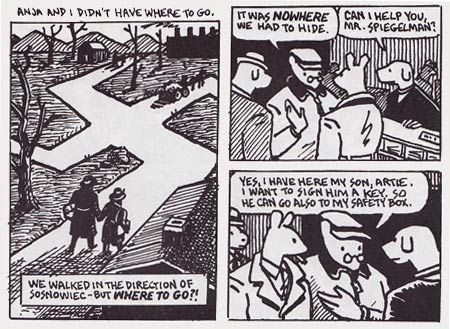
One example is the moment when Vladek and Anja leave the bunker in which they were hiding for days. They leave after days of hunger and terror inside the bunker. Many of their companions in the bunker have been shot and others are killed after they leave. In the left picture, the landscape is barren and lonely, symbolizing the deaths of all of the family members and the loneliness of the surviving members. The surroundings are clothed in black shadows, symbolizing the funerals of the dead family and friends and the bleakness of their situation.
Furthermore, the road that Vladek and Anja are walking on is a crosswalk, but at the same time it is also in the shape of a swastika. In this scene Vladek claims that " [they] had no where to go". Wherever they went, they would still be found by the Nazi soldiers. In the drawing, the swastika stretches endlessly in the horizon like the legs of a spider, and Vladek and Anja are unable to escape its grasp.

Another depiction that I found interesting was Speigelman's reaction to the success of the first volume of Maus. He is shown to be working on top of the corpses of those lost in the Holocaust. For him, it must feel as if his success was built on the lives of the many Jewish citizens that were killed. By writing about the lives of the Jewish that were killed, he rose to fame and success. The flies buzzing by his ears are a constant reminder of his success and the rotting bodies underneath him. The mouse mask that he wears shows that although he tries to be a mouse, he can never experience what his father and the other Jews went through during the Holocaust. Additionally, in the upper right corner, a guardhouse surrounded by barbed wire is shown. For Speigelman, the fame and pressure put upon him by the success of the first volume of Maus must seem suffocating. The public eye seems to be constantly watching him and observing his actions, making his daily life seem like a prison.
Sunday, October 9, 2016
What Is Water?
While reading This Is Water, I agreed with Wallace's ideology and viewpoint; it just made sense and fit well logically. It's "my natural default setting ... that situations like this are really all about me." While reading this, the mention of water really appealed to me. If we think about life as surrounded by water, it seems so easy to see other people since water is transparent. However, water also has another use: a mirror. When we look into the water, all we end up seeing is ourselves instead of the others that we should be noticing. Something that seems so logical and simple is instead hard for people to do.

As much as I try to think about others first and put myself after, I grow wary of the fact that while other people use me to better their own lives, I end up missing the opportunities that life presents to me. It seems easy to accept the fact that I am not the center of the universe, yet in my daily life I almost always think of myself first. But then again I think, it is really wrong to think of myself first? If I don't prioritize myself, then who will? If almost everyone wishes the best for themselves, then who will support me? Is it wrong to be the main character of my own story? Should I instead be the supporting character in someone else's story?
While I should be considerate of others, I don't think I should totally sacrifice myself for the sake of others. As a person, I still have my own dreams and my own character. When I can, I should be considerate of others and helpful to their dreams, but I don't believe that I should completely donate my body and my life to the service of other people.
While I wholly agree with David Foster Wallace's point that the consideration of others is essential, I still believe that, I myself, as my own person, should not be required to throw away my own individuality and life to sacrifice for the wellbeing of others.
As much as I try to think about others first and put myself after, I grow wary of the fact that while other people use me to better their own lives, I end up missing the opportunities that life presents to me. It seems easy to accept the fact that I am not the center of the universe, yet in my daily life I almost always think of myself first. But then again I think, it is really wrong to think of myself first? If I don't prioritize myself, then who will? If almost everyone wishes the best for themselves, then who will support me? Is it wrong to be the main character of my own story? Should I instead be the supporting character in someone else's story?
While I should be considerate of others, I don't think I should totally sacrifice myself for the sake of others. As a person, I still have my own dreams and my own character. When I can, I should be considerate of others and helpful to their dreams, but I don't believe that I should completely donate my body and my life to the service of other people.
While I wholly agree with David Foster Wallace's point that the consideration of others is essential, I still believe that, I myself, as my own person, should not be required to throw away my own individuality and life to sacrifice for the wellbeing of others.
Sunday, October 2, 2016
Taking Action: America Needs to Step It Up
Throughout Thoreau's piece, On the Duty of Civil Disobedience, Thoreau claims that the people and citizens of America must take action to accomplish what they want to happen. Thoreau imparts that it is the duty of a good citizen to be skeptical of the government and to take action when there are injustices present. He states that "if [the injustice of the government] is of such a nature that it requires you to be the agent of injustice to another, then, I say, break the law. Let your life be a counter friction to stop the machine" (Thoreau 1022).
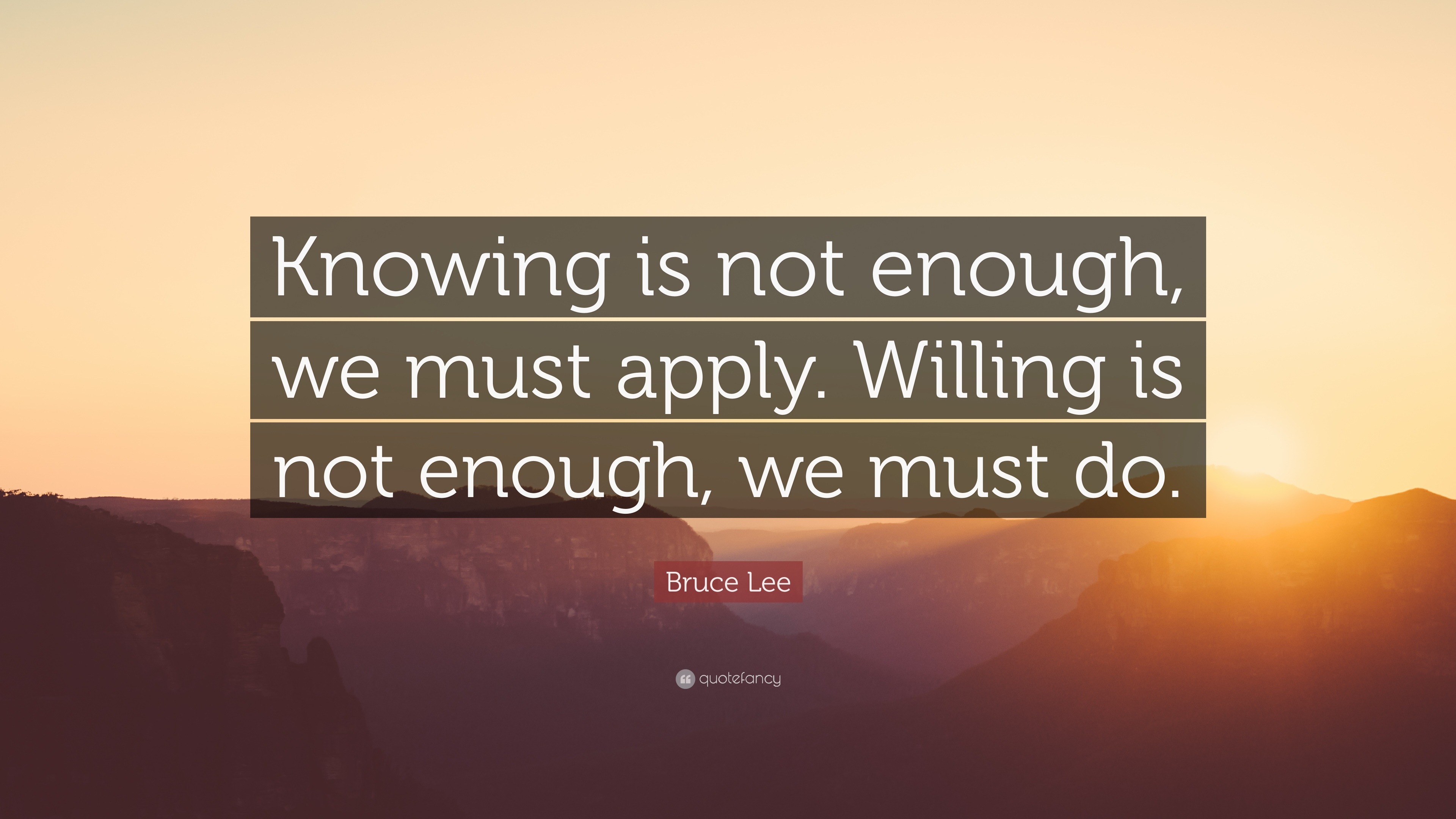
This may seem hard to apply in the present day, but it is evident in everyday life. Acting upon thoughts is not only a political matter, it can be applied to daily life. Just walking down the hallway in school, I sometimes notice pieces of scrap paper or trash scattered in the hallway and people just passing by, ignoring the mess. At those times, I just think about how someone should really clean that up, but I rarely act upon my thoughts. Maybe it is due to laziness, or the instinct to not stick out from a sea of people, but the lack of action from the majority of people is disconcerting because as a majority, we should be working together to improve society.
Thoreau's philosophy is especially important now. With the upcoming election, the people's voices and viewpoints can actually be heard. It is important that people vote in the approaching election so they can act upon their viewpoints and thoughts. While many people complain that they dislike both candidates and thus will not vote, I find it ironic that they are complaining about politics or the actions of the government. As a citizen, we have to right to vote and to speak our minds. When you disagree with the majority opinion, it is up to you, as a citizen, to foster change and development. If you disagree with a viewpoint, why not start a protest? If you dislike both candidates, why not vote for another candidate from a smaller party instead? Or even run for candidacy yourself?
It is precisely the inactivity and lack of responsibility of the American citizens that has led to our current situation today; the majority is aware of the inadequacies of both candidates and needs to acknowledge that only with action, is any change possible.
Sunday, September 25, 2016
Stereotypes throughout the Past, Present, and Future
In society, it is evident that stereotypes exist. Whenever we see someone, we unconsciously place them within a stereotype based upon how they look or how they act. This instinctive categorization has been happening for centuries and has no intention of stopping.

Since the moment Europeans arrived in America, stereotypes agains the Native americans have been formed. The mere fact that the Native Americans dressed different and looked different caused the Europeans to treat them as inferior creatures. This stereotype has extended from the past to the present today. In Sherman Alexi's story, Victor's father states "Besides, why would you ever want to fight a war for this country? It's been trying to kill Indians since the very beginning." Stereotyping and discrimination against Native Americans have existed for centuries and will never truly go away.
But why do stereotypes exist? Why do they continue to last? A stereotype in definition is "a widely held but fixed and oversimplified image or idea of a particular type of person or thing" as defined by Merriam Webster. At first, stereotypes may have been used by white men to justify their superiority to other cultures. By giving certain people certain traits, it was easier to justify why these certain groups should be denied right or privileges. Additionally, the reason why stereotypes may still exist today might be due to the continuation of tradition by society. These stereotypes have been alive for so many years and are kept alive through the lingering influences of the past on society; stereotyping is unconsciously done and is unavoidable. Ultimately, it will be hard for stereotypes to be completely eliminated in the future.
But why do stereotypes exist? Why do they continue to last? A stereotype in definition is "a widely held but fixed and oversimplified image or idea of a particular type of person or thing" as defined by Merriam Webster. At first, stereotypes may have been used by white men to justify their superiority to other cultures. By giving certain people certain traits, it was easier to justify why these certain groups should be denied right or privileges. Additionally, the reason why stereotypes may still exist today might be due to the continuation of tradition by society. These stereotypes have been alive for so many years and are kept alive through the lingering influences of the past on society; stereotyping is unconsciously done and is unavoidable. Ultimately, it will be hard for stereotypes to be completely eliminated in the future.
Sunday, September 18, 2016
Life, Liberty, and the Pursuit of Happiness
Think about it. Ever since a young age, we've been taught that the United States provides to every single citizen the rights to life, liberty, and the pursuit of happiness. But what defines liberty? What is the pursuit of happiness? Why are these so valued in America? As stated in the declaration, every man is "endowed by their Creator with certain unalienable Rights, that among these are Life, Liberty and the pursuit of Happiness." Even life, a term that may seem easy to define for people, can be interpreted in different ways.
For many years, the ideas of life, liberty, and pursuit of happiness have been depicted as a stable foundation of rock on which the country is built upon. These rights have been considered a fundamental part in how the United States was built and how it still operates today. Contrary to popular belief however, the meaning of these rights have been constantly fluctuating throughout history and among the minds of the people. While taking a look back into the past, it is obvious that the rights delegated to our predecessors were different to the ones we have today. For example, while in the past the right to the pursuit of happiness for women meant raising children and supporting her husband, currently women take the pursuit of happiness very differently; They are free to seek out a career in a field they wish to study or engage in the activities that define them as a person.
In addition to this, each definition of each right differ in the minds of different people. For example, some people may define the right to life as the right to be alive. Others may define the right to life as the right for people to live their lives as they wish and to make their own decisions as an individual with his or her own life. The meaning of each of these is subjective; each of these symbolize different things for different people and is dependent on the personal experience and thought process of each person. There is no absolute or definite meaning for each of these rights and it will be inconceivable to come to a consensus due to the relentless push of time and the individuality of each person.
In addition to this, each definition of each right differ in the minds of different people. For example, some people may define the right to life as the right to be alive. Others may define the right to life as the right for people to live their lives as they wish and to make their own decisions as an individual with his or her own life. The meaning of each of these is subjective; each of these symbolize different things for different people and is dependent on the personal experience and thought process of each person. There is no absolute or definite meaning for each of these rights and it will be inconceivable to come to a consensus due to the relentless push of time and the individuality of each person.
Subscribe to:
Posts (Atom)